
TDS Meters
HM Digital TDS Meter
An HM Digital TDS meter gives you a quick reading of total dissolved solids in your water, whether you're checking a RO system, a drinking water filter, an aquarium, or a hydroponics setup. TDS stands for total dissolved solids, and a TDS reading indicates water quality, not a complete water test. A TDS meter doesn't identify each contaminant in your water; it measures the overall concentration of dissolved material, which makes it most useful for monitoring changes over time rather than diagnosing a specific problem.
What Does an HM Digital TDS Meter Measure?
TDS readings are usually displayed in parts per million (ppm). The meter estimates dissolved material based on the electrical conductivity of the water; more dissolved solids generally means higher conductivity, and the meter converts that reading into a ppm figure. A higher or lower TDS reading doesn't automatically mean water is safe or unsafe. TDS should be used as a monitoring tool alongside appropriate water testing rather than as a standalone safety check.
Common uses for a TDS meter include:
- Comparing source water against filtered water
- Checking RO membrane performance over time
- Monitoring changes in drinking water
- Checking water used in aquariums or hydroponics
- Spotting possible changes in a treatment system before they become bigger problems
What an HM Digital TDS meter cannot do is specifically identify arsenic, PFAS, lead, bacteria, or other individual contaminants; for that, you'll want a dedicated water test kit.
HM Digital TDS Meters by Application
HM Digital TDS-EZ Water Quality TDS Tester
The HM Digital TDS-EZ Testing Meter is a portable, handheld unit built for quick TDS testing. It's suitable for checking drinking water, RO product water, and other water samples around the house. Its compact design makes it easy to keep on hand for occasional testing.
As an HM Digital TDS EZ Water Quality TDS tester, it's the simplest way to get a fast reading without installing anything. It is AFW's most affordable HM Digital TDS meter. Like every meter here, the HM Digital TDS EZ Water Quality Tester estimates dissolved solids; it won't tell you which specific contaminants are present.
HM Digital DM-1 Residential Inline Dual TDS Meter-Monitor
The HM Digital DM-1 In-Line Dual TDS Monitor takes a different approach: rather than a handheld spot check, it installs inline so you can monitor both untreated water and purified water continuously and compare the two side by side on its LCD, with readings measured up to 9990 ppm.
As the HM Digital DM-1 residential inline dual TDS meter-monitor, it's built for use with residential RO systems and other compatible filtration equipment. Before ordering, confirm your tubing size and installation compatibility so the DM-1 fits your existing setup.
HM Digital TDS-3 Handheld TDS Meter
Shoppers researching an HM Digital TDS-3 TDS meter are often comparing handheld options for spot-checking source water against filtered water.
AFW's current TDS meter lineup is built around the TDS-EZ, DM-1, and COM-100. If you're weighing an HM Digital TDS-3 handheld TDS meter against what's available here, our team can help you figure out whether the TDS-EZ meets the same need.
HM Digital COM-100 EC/TDS/TEMP Combo Meter
The HM Digital EC/TDS/TEMP Combo Meter COM-100 measures electrical conductivity, TDS, and temperature in one unit, with three calibration options (KCl, 442TM, and NaCl), each with its own non-linear scale.
It's built for more technical water-quality monitoring applications where you need more than a single TDS number.
HM Digital PM-2 In-Line TDS Alarm Monitor
The HM Digital PM-2 In-Line TDS Alarm Monitor is an external inline monitor with an adjustable setpoint, a 0-200 ppm range, an optional alarm, and standard 1/4-inch fittings, letting you monitor water purity continuously and get alerted if it drifts out of range.
How to Use a TDS Meter with an RO System
Readings from any TDS hm digital meter let you track feed-water TDS, RO product-water TDS, the difference between untreated and purified water, and changes over time that might point to a membrane or filter-performance issue.
That said, a TDS reading shouldn't be the only reason to replace an RO membrane. Also consider filter age, product-water taste, production rate, wastewater ratio, water pressure, and the manufacturer's specifications for your specific RO membrane.
Handheld vs. Inline TDS Meters
| Feature | Handheld Meter | Inline Monitor |
|---|---|---|
| Testing method | Spot testing | Continuous or installed monitoring |
| Best for | Occasional checks, multiple water sources | RO systems and fixed filtration equipment |
| Installation | None required | Requires tubing and compatible connections |
| Portability | Easy to carry | Remains installed |
| Reading | Taken manually | Displayed during operation |
| Example | TDS-EZ | DM-1 or PM-2 |
TDS Meter Calibration and Maintenance
Follow the instructions in your product manual, and use the correct calibration solution where one is required. Keep the probe clean, and avoid storing it dry if your instructions call for keeping it moist. Replace batteries when readings become inconsistent, rinse the probe between samples to avoid cross-contamination, and confirm the temperature and calibration requirements for more technical meters like the COM-100 before relying on a reading.
Choose the Right TDS HM Digital Meter
Choose a handheld HM Digital TDS meter like the TDS-EZ for occasional testing. Choose an inline monitor like the DM-1 or PM-2 for a system you've already installed and want to track continuously. Choose the COM-100 when you need EC, TDS, and temperature readings together. Choose the PM-2 when you want an adjustable alarm or setpoint. If you're not sure which meter matches your equipment, contact AFW Filters, and we'll help you figure it out.
-
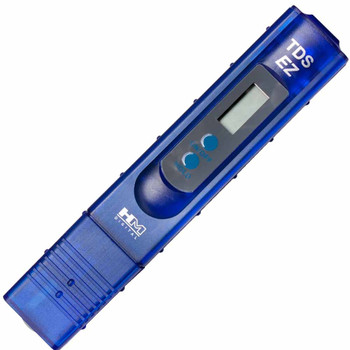
HM Digital TDS-EZ Testing Meter
$18.99HM Digital EZ TDS meter tests the TDS (total dissolved solids), which is an indicator of water quality. Product Features Measures TDS Tests TDS (total dissolved solids), an indicatTDS-EZ$18.99 -

HM Digital DM-1 In-Line Dual TDS Monitor
$29.40The HM Digital DM-1 in-line dual TDS monitor allows you to monitor both the untreated water and the purified water and compare the two. The TDS, displayed on the LCD screen, is measured up to 9990...TDS-DM-1$29.40 -

HM Digital EC / TDS / TEMP Combo Meter COM-100
$76.95Specifications: Measures electrical conductivity (EC), total dissolved solids (TDS) and temperature Three different calibration options (KCl, 442TM, NaCl), each with its own non-linear...TDS-Com-100$76.95 -

HM Digital PM-2 In-Line TDS Alarm Monitor
$69.00External inline TDS monitor Adjustable Setpoint Range: 0-200ppm Optional Alarm Standard 1/4" fittings The PM-2 in-line TDS monitor by HM Digital allows you to monitor water purity and...TDS-PM-2$69.00