
Injection Pumps
Chemical Injection Pumps and Injection Systems for Well Water
A chemical injection pump adds a measured dose of chlorine, hydrogen peroxide, or soda ash to your water line every time your well pump runs. Dosed correctly and paired with the right filter, one injection pump can treat iron, rotten-egg odor, and acidic water at the source.
We carry Stenner peristaltic injection pumps, complete soda ash systems, solution and retention tanks, and replacement parts that keep pumps dosing accurately.
How a Chemical Injection System Works
An injection system is more than a pump. Each part of a well water injection system has a job, and the order matters:
- Well pump and pressure tank: supply the water and switch the injection pump on and off.
- Injection pump: doses the chemical into the water line, before or after the pressure tank.
- Mixing or retention tank: gives the chemical time to react with the water.
- Backwashing or carbon filter: captures what the chemical oxidized and reduces leftover chemical.
Powered by Your Well Pump
In a typical install, the injection pump plugs into an outlet wired to your well pressure switch. That outlet only has power while the well pump runs, so the injection pump doses only when water is moving through the line. There are no timers to set and no guessing when to feed.
Contact Time and the Retention Tank
Chemicals need time in contact with the water to do their work. A mixing or retention tank after the injection point provides that time before water reaches your filters.
The Automated Pure Water Chemical Mixing Retention Tank uses 2 built-in mixing chambers and 2 swirl chambers to break the water into micro bubbles. It's designed to cut the necessary contact time by up to 80%.
Removing Excess Chemical After Treatment
Once the chemical has done its job, a downstream filter captures the oxidized particles and reduces leftover chemical before water reaches your taps. For chlorine and hydrogen peroxide systems, catalytic carbon systems are a common final step.
Match the Chemical to Your Water Problem
The right chemical depends on what's in your water, so the starting point is always a water test. Iron, sulfur, bacteria, and low pH each call for a different approach, and many wells have more than one.
Chlorine for Iron, Sulfur Odor and Bacteria
Chlorine is one of the most common injection chemicals for well water. It oxidizes dissolved iron and hydrogen sulfide so a downstream filter can capture them, and it's a long-standing method for disinfecting well water. The standard Santoprene tube in Stenner pumps is rated for household bleach.
Pair chlorine injection with one of our iron and sulfur filters to catch what the chlorine oxidizes.
Hydrogen Peroxide for Rotten Egg Odor
Hydrogen peroxide is a strong oxidizer that targets the rotten egg odor caused by hydrogen sulfide. Pro Neutra Sul Pro Products HP41N Professional Grade Oxidizer is formulated to neutralize rotten egg smells and protect against irregular coloring in treated water. The standard Santoprene tube in Stenner pumps is rated for hydrogen peroxide under 50%.
Soda Ash for Acidic, Low-pH Water
Acidic water with very low pH can corrode copper plumbing and fixtures, and soda ash injection raises pH at the source. Our Soda Ash Injection System for Acidic Water includes a 50 lb. bag of soda ash, the Stenner 85MHP17 adjustable injection pump, and a 15-gallon solution tank. A second version adds the mixing/retention tank.
For other ways to correct pH, see our full range of pH treatment systems.
Why Stenner Injection Pumps
Stenner pumps use a peristaltic design. Rollers squeeze a flexible tube to move the chemical, so the chemical only contacts the tube inside the pump head, and there's no priming hassle. They self-prime up to 25 feet, won't vapor lock or lose prime, and use snap-fit components that make tube changes quick.
The 85MHP17, for example, is WQA tested to ANSI/NSF Standard 60 and ETL tested to ANSI/NSF Standard 50. It carries a 1-year manufacturer's warranty.
Stenner 85MHP17: The Most Common Choice
The Stenner 85MHP17 is the most commonly used model. It's widely used for chlorine and soda ash injection and suits just about any chemical injection application. Output is adjustable, so you can set the dose to your water. It comes with an installation kit and a 110V power supply, with 220V available.
It's available on its own as the Stenner Injection Pump 85MHP17 NO TANK, or paired with a tank as the Stenner Injection Pump 85MHP17 & 15 Gal. Solution Tank.
Stenner 45MHP10 for a Different Output Range
Stenner builds models with different outputs for applications that need a different dose range than the 85MHP17. The Injection Pump 45MHP10 NO TANK shares the same adjustable, self-priming design. It fits when your dosing calculation points to a different output.
Proportional Injection for Variable-Speed Well Pumps
Wells with variable-speed pumps need dosing that follows the flow, not just the pump's on-and-off cycle. The Stenner Proportional Injection System provides reliable dosing for applications that can't connect directly to a well power supply. Treatment stays consistent as demand changes.
Choosing Your Injection Pump or Complete System
Start with a water test kit so you know which chemical you need and roughly how much. Then match the equipment to your setup.
| Your situation | What fits |
|---|---|
| New install for low-pH water | Soda Ash Injection System for Acidic Water, with or without the mixing/retention tank |
| New chlorine or peroxide install | Stenner Injection Pump 85MHP17 & 15 Gal. Solution Tank, plus a retention tank and filter |
| Replacing a worn pump, tank already in place | Stenner Injection Pump 85MHP17 NO TANK |
| Variable-speed well pump | Stenner Proportional Injection System |
| Fewer refills | Polyethylene 35 Gallon Chemical & Solution Tank |
Match Voltage to Your Well Power Supply
The pump runs off the same circuit as your well pump, so the voltage has to match. Stenner pumps come with a 110V power supply, and 220V is available. Pick the one that matches your well power supply.
Pump Only or Complete System
If you already have a solution tank, retention tank, and filter in place, a pump on its own is all you need. For a new install, a pump with a solution tank or a complete soda ash system puts matched pieces together from the start.
Solution Tank Size
The 15-gallon solution tank comes with our pump-and-tank packages. For fewer refills, the Polyethylene 35 Gallon Chemical & Solution Tank holds more than twice as much. Its rugged polyethylene build works indoors or outdoors with soda ash, chlorine, and hydrogen peroxide.
Keep Your Pump Dosing Accurate
The pump tube is the part that wears, and a worn tube can throw off your dose. Keeping spare parts on hand turns a repair into a quick swap instead of days without treatment.
- Stenner Replacement Tubes #2 - 2 pack: #2 Santoprene tubes, the default size and material for Stenner pumps.
- Stenner HPACK-2 accessory kit with #2 tube, suction parts, and injector parts: The common wear parts in one kit.
- Stenner injector check valve 1/4": A replacement injector check valve for Stenner pumps.
- Stenner Tube Housing Cover W/ Bushing: A replacement cover for the pump's tube housing.
-

Automated Pure Water Chemical Mixing Retention Tank - Reduces Necessary Contact Time By Up to 80%
$799.00A unique system with 2 built in mixing chambers and 2 swirl chambers that reduces a drop of water to hundreds of micro bubbles, allowing the chemical to mix and react 5 times faster than a standard...TNK-RET-1260$799.00 -

Stenner Injection Pump 85MHP17 & 15 Gal. Solution Tank
$699.00Stenner 85MHP17 adjustable injection pump Product Features Stenner 85MHP17 Adjustable Stenner 85MHP17 chemical injection pump Self-Prime Self-priming up to 25INJ-STNR-85MHP$699.00 -

Soda Ash Injection System for Acidic Water - Includes Stenner 85MHP17 Injection Pump & 15 Gal. Solution Tank
$799.00The complete soda ash injection system includes a 50 lb. bag of soda ash, the Stenner 85MHP17 adjustable injection pump, and a 15 gallon solution tank. Great for very acidic water with very low pH...INJ-SODA$799.00 -

Polyethylene 35 Gallon Chemical & Solution Tank - Natural
$185.0035 Gallon Tank - Chemical tank used with chemical injection systems, including soda ash, chlorine, and hydrogen peroxide. Rugged polyethylene construction allows for indoor and outdoor applications...CHM-35$185.00 -

Stenner Replacement Tubes #2 - 2 pack
$69.00Stenner #2 Replacement Tubes 2 pack Product Features #2 Santoprene Tubes Default size and material used with Stenner pumps 2-pack Includes 2 tubes so you haveSTNR-TB-22$69.00 -
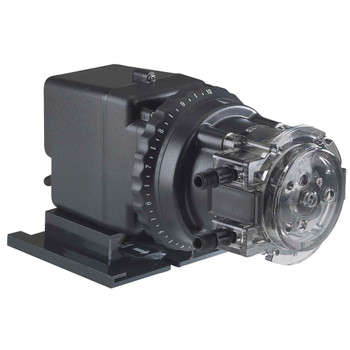
Stenner Injection Pump 85MHP17 NO TANK
$599.00Product Features Adjustable Stenner 85MHP17 chemical injection pump Self-priming up to 25 feet and will not vapor lock or lose prime Versatile pump design includes snap-fit components Comes with...STNR-85MHP$599.00 -

Stenner HPACK-2 accessory kit with #2 tube, suction parts and injector parts
$87.00PRODUCT INFO Supplier: G.h. Stenner & Co. Inc.# Supplier Part #: HPACK-2 Stenner 1/4ST-HPACK-2$87.00 -

Stenner injector check valve 1/4"
$59.00Replacement injector check valve for use with Stenner pumpsST-UCDBINJ$59.00 -

Stenner Proportional Injection System
$2,059.00Stenner proprtional injection system provides reliable dosing for applications unable to connect directly to a well power supply. Product Features Proportional Injection Provides iINJ-STNR-Prop$2,059.00 -

Soda Ash Injection System for Acidic Water - Includes Stenner 85MHP17 Injection Pump, Mixing/Retention Tank & 15 Gal. Solution Tank
$1,599.00The complete soda ash injection system includes a 50 lb. bag of soda ash, the Stenner 85MHP17 adjustable injection pump, and a 15 gallon solution tank. Great for very acidic water with very low pH...INJ-SODA-RET-TNK$1,599.00 -

Pro Neutra Sul Pro Products HP41N Professional Grade Oxidizer 1 Gallon
$29.00DESCRIPTION ELIMINATE ROTTEN EGG SMELL PROFESSIONAL GRADE OXIDIZER Protects against irregular coloring and rotten egg smells in treated water. Pro Neutra Sul® is formulated to neutralize the...HP41N-1GL$29.00 -

Stenner Tube Housing Cover W/ Bushing
$95.00Stenner Tube Housing Cover with BushingSTNR-Cover-UCCP100$95.00 -

Injection Pump 45MHP10 NO TANK
$699.00Product Features Adjustable Stenner chemical injection pump 45MHP10 Self-priming up to 25 feet and will not vapor lock or lose prime Versatile pump design includes snap-fit components Comes with...45MHP10$699.00