
Reverse Osmosis Systems
Reverse Osmosis Systems That Remove What You Can't See
A reverse osmosis system removes up to 95–99% of dissolved contaminants, lead, arsenic, fluoride, nitrates, and PFAS for bottled-quality water straight from your own tap. Whether you need a drinking water setup under the sink, a portable unit for a rental or RV, or a whole-home solution, there's an RO system built for it below.
-

5-stage Zoi Alpha Pure Reverse Osmosis System
$269.00Achieve bottled quality water right in your home with the 5-stage Zoi Alpha Pure Reverse Osmosis System! This advanced undersink water filtration system transforms ordinary municipal water into a...DRO-Alpha$269.00 -

8-Stage UV+pH+Alkaline Zoi Pi Pure Reverse Osmosis System - Sterilizes, Neutralizes Acid, and Alkalizes Water
$429.007-Stage pH+Alkaline system purifies water while raising the pH, adding a wide range of beneficial minerals, and alkalinizing the water. The Zoi Mu Pure system uses reverse osmosis (RO) to remove...DRO-Pi$429.00 -
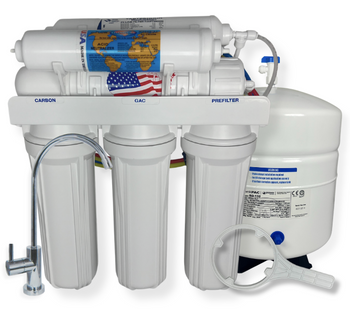
6-Stage pH Zoi Epsilon Pure Reverse Osmosis System
$299.00Transform your drinking experience with the 6-Stage pH Zoi Epsilon Pure Reverse Osmosis System that ensures you enjoy clean, great-tasting water right from the tap. This advanced filtration system...DRO-Epsilon$299.00 -

7-Stage pH+Alkaline Zoi Mu Pure Reverse Osmosis System - Neutralizes Acid & Alkalizes Water
$369.007-Stage pH+Alkaline system purifies water while raising the pH, adding a wide range of beneficial minerals, and alkalinizing the water. The Zoi Mu Pure system uses reverse osmosis (RO) to remove...DRO-Mu$369.00 -
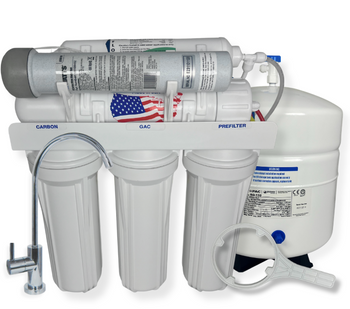
6-Stage UV Zoi Gamma Pure Reverse Osmosis System
$359.00Experience purified drinking water like never before with the 6-Stage UV Zoi Gamma Pure Reverse Osmosis System. Designed to transform well water into safe, bottled quality water, this cutting-edge...DRO-Gamma$359.00 -

4-stage Aquarium RO/DI Psarion Omega Reef System
$159.00The 4-stage Aquarium RO/DI Psarion Omega Reef System ensures you have pure, distilled quality water right at your fingertips. Perfectly designed for reef aquariums, labs, or anywhere DI water is...ARO-Omega$159.00 -
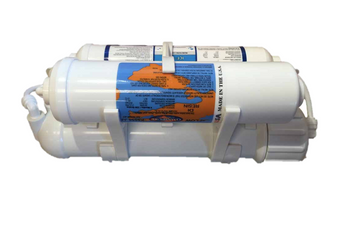
Mikro Delta 4-Stage Portable RO System PLUS DI with 75 GPD Membrane (Former Psi system)
$159.00The Mikro Psi portable 4-stage RO/DI system for distilled reef aquarium water for tight spaces. System includes inline sediment filter, inline GAC filter, 75 GPD membrane, and inline DI filter built...PRO-Delta$159.00 -

Mikro Alpha 4-Stage Portable Reverse Osmosis System with 75 GPD Membrane
$129.00The Mikro Alpha 4 stage portable reverse osmosis (RO) water system designed for those who want high quality water in a compact size. Featuring four stages of filtration, this system is ideal for...PRO-Alpha$129.00 -

7-Stage UV+pH Zoi Theta Pure Reverse Osmosis System
$379.00Experience pure, clean drinking water with the 7-Stage UV+pH Zoi Theta Pure Reverse Osmosis System. This advanced filtration system not only eliminates harmful contaminants but also enriches your...DRO-Theta$379.00 -

6-Stage Alkaline Zoi Zeta Reverse Osmosis System - Alkalizes Water
$349.00Experience the ultimate in home hydration with the 6-Stage Alkaline Zoi Zeta Reverse Osmosis System. This advanced filtration system not only purifies your drinking water but also elevates its pH and...DRO-Zeta$349.00 -

Flowlok Leak Protection System - 1/4"
$29.00FLOWLOK Leak Detector No electricity required Prevent costly water damage Fits most undersink filters Easy to install Includes 2 saftey discs Tray Dimensions: 16.75 x 6.25 x 1.5...FLK-KIT$29.00 -
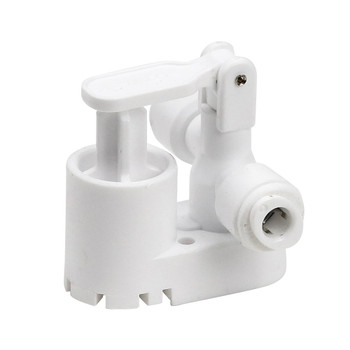
Flowlok Leak Protection Device - 1/4"
$17.00The FLOWLOK Leak Protection System is a series of products designed to help you take safe guards against possible leaks from you water filtration system. The product shuts off the water supply to...FLK-14$17.00 -

5-Stage PT-505 Vertex Gold Seal Certified Reverse Osmosis System 50 GPD
$390.00Made in the USA GOLD seal water quality certified! The 5-stage system with a 50 GPD membrane and 5 filter stages blocks high sediment contamination. This 5-stage model is designed toDRO-PT-50$390.00 -
 $1,059.00
 -

Mikro Omega 3 Stage Portable Aquarium RO/DI System with 75 GPD Membrane
$139.00The Mikro Omega portable 3 stage aquarium and drinking water system designed for those who want high quality water in a compact size. The system only measures about 14"x6"x6". Featuring three stages...PRO-Omega$139.00
What Is a Reverse Osmosis System & How Does It Work?
The Semipermeable Membrane (0.0001 Micron) Explained
At the core of every RO filtration system is a semipermeable membrane with pores around 0.0001 micron small enough to let water molecules through while blocking dissolved salts, metals, and most other contaminants at a near-ionic level. Household water pressure pushes water through this membrane, leaving the rejected contaminants behind to be flushed to drain.
The Filtration Stages
Most systems run water through four stages in sequence:
- A sediment pre-filter removes grit and particles
- A carbon pre-filter removes chlorine that would otherwise damage the membrane
- The RO membrane itself removes dissolved contaminants
- And the post-carbon filter polishes the water's taste right before it reaches your faucet
What Does Reverse Osmosis Remove?
Lead, Arsenic, Fluoride, Nitrates, PFAS, TDS & Cysts
A properly certified water purifier reverse osmosis system reduces up to 95–99% of dissolved contaminants, including lead, arsenic, fluoride, nitrates, PFAS, and total dissolved solids (TDS), along with cysts like Cryptosporidium. This makes RO the broadest single-technology option for contaminants that carbon filtration alone can't touch.
Does RO Remove Healthy Minerals?
Yes, the same membrane that blocks contaminants also removes most dissolved minerals, including calcium and magnesium. This isn't a health concern on its own, since most people get the bulk of their dietary minerals from food rather than water, but if you prefer the taste of mineralized water or a higher pH, look for a system with a remineralization or alkaline stage, which adds calcium and magnesium back in after filtration.
Types of Reverse Osmosis Systems We Offer
Under-Sink Drinking RO Systems
The standard setup for most households is installed under the kitchen sink with a dedicated faucet; these systems deliver filtered water on demand for drinking and cooking.
Portable & Countertop RO Systems
A portable reverse osmosis system needs no permanent plumbing modification, making it ideal for renters, RVs, cabins, or anyone who wants purified water without drilling into a countertop.
Aquarium & Reef RO/DI Systems
Reef tanks and sensitive aquariums need water purified beyond standard drinking-water RO, adding a deionization (DI) stage that strips out virtually all remaining dissolved minerals for the ultra-pure water reef chemistry requires.
High-Output & Tankless On-Demand RO
Traditional tank-based RO systems typically operate around 20% recovery, meaning a lot of water goes to drain for every gallon produced. Tankless, on-demand systems flip that ratio dramatically, often running 2:1 to 3:1 pure-to-drain, producing water continuously without a storage tank taking up cabinet space.
Whole-Home RO & Pre-Treatment: What You Actually Need?
True whole-home RO (treating every tap in the house) is uncommon and expensive to maintain, since it processes far more water than a point-of-use system. For most households, the smarter setup is point-of-use RO at the kitchen sink for drinking and cooking, paired with separate whole-house filtration or softening for the rest of the home's water. Look for Gold and Platinum Seal Certified RO Systems if certification matters most to you, or Eco-Friendly Certified options if water waste is your priority.
How to Choose the Right RO System?
Sizing by GPD & Household Size
GPD (gallons per day) is the system's rated output, and it should match your household's actual demand rather than just the biggest number on the box. Smaller households do fine with a 50 GPD system for drinking and cooking, while larger families or homes feeding a refrigerator or ice maker benefit from 75 GPD or a high-output/tankless unit, keeping in mind that real-world output is also affected by your home's water pressure and TDS level.
NSF/ANSI 58, Gold Seal & Certifications
NSF/ANSI 58 is the standard specifically written for point-of-use reverse osmosis systems, requiring at least 75% TDS reduction along with tested performance against contaminants like arsenic, lead, fluoride, nitrate, and radium. The WQA Gold Seal is a third-party certification confirming a system has been independently tested and consistently manufactured to meet that standard. Look for either mark if certified performance matters to you.
Water Waste / Recovery Ratio & Efficiency
Every RO system sends some water to drain as part of the filtration process, expressed as its recovery ratio or pure-to-drain ratio. Standard tank-based systems often run closer to 1:4 or 1:5 (more waste per gallon produced), while modern tankless and high-efficiency systems can reach 2:1 or better, using significantly less water for the same amount of purified output.
Reverse Osmosis for Well Water
The Correct Pre-Treatment Sequence
RO membranes are sensitive to the exact conditions that well water often brings, including iron, hardness, and sediment all foul or scale a membrane far faster than treated city water.
Before installing RO on a well, pre-treat with a Sediment Filter to remove grit, an Iron & Sulfur Filter if iron is present, and a Water Softener if hardness is above a few grains per gallon.
Then, install the RO system at the sink as the final polishing step for drinking water. A Water Test Kit is the right starting point to know what pre-treatment you actually need.
Frequently Asked Questions
What does a reverse osmosis system remove from water?
RO reduces up to 95–99% of dissolved contaminants, including lead, arsenic, fluoride, nitrates, PFAS, chlorine byproducts, and total dissolved solids (TDS), plus cysts like Cryptosporidium. The membrane's roughly 0.0001-micron pores block almost everything except water molecules themselves.
Does reverse osmosis remove beneficial minerals, and is that bad?
Yes, RO removes most dissolved minerals along with contaminants. It's not harmful, since most dietary minerals come from food rather than water, but if you prefer mineral taste or a higher pH, choose a system with a remineralization or alkaline stage that adds calcium and magnesium back in after filtration.
Tank vs. tankless RO, which is better?
Tank systems store filtered water for steady pressure and work without electricity, but take up more cabinet space and refill more slowly. Tankless systems save space and produce water on demand with better water efficiency, but need power and typically rely on a booster pump. The right choice comes down to your available space, household demand, and whether an electrical hookup is convenient.
What size RO system (GPD) do I need?
GPD (gallons per day) should match your household's demand. A 50 GPD system suits smaller households for drinking and cooking, while larger families or homes feeding a fridge or ice maker benefit from 75 GPD or a high-output/tankless unit. Higher inlet pressure and lower source-water TDS both improve real-world output.
How often do I replace RO filters and the membrane?
Sediment and carbon pre/post filters are typically replaced every 6–12 months, and the RO membrane every 2–5 years, depending on water quality and usage. Hard or high-TDS water shortens these intervals, and a good sediment/carbon pre-filter helps protect the membrane and extend its life.
Can I use reverse osmosis on well water?
Yes, but RO alone usually isn't enough for a well. Iron, hardness, sediment, and sulfur should be handled by pre-treatment sediment/iron filters or a softener installed upstream, with the RO system placed at the sink as the final polishing step for drinking water.