
PFAS Whole House Water Treatment
Whole House Water Filter PFAS
The PFAS whole house water filter for your home depends on your confirmed PFAS compounds, their concentration, your water flow, daily usage, required contact time, and whether the system uses carbon or resin technology. There isn't a single answer that fits every household, which is exactly why testing comes before buying.
AFW's PFAS-selective resin system is a point-of-entry option built to treat water as it enters your home, addressing PFAS across every tap rather than a single faucet. It is the core idea behind any PFAS water filter whole-house homeowners install.
What Is a Whole-House PFAS Water Filter?
A PFAS whole-house water filter is installed at the point where water enters your home, treating it before it reaches showers, sinks, appliances, and drinking-water taps.
AFW's system uses PFAS-selective ion-exchange resin, media designed specifically to target PFAS compounds, depending on the product specifications.
It may also address nitrates. Installing the media doesn't automatically make your water "safe" the moment it's connected; ongoing testing and proper maintenance are part of how a whole-house PFAS water filter actually performs over time.
AFW PFAS Treatment Products
Whether you're comparing products on price, flow rate, or media type, these two items make up what AFW considers when recommending the best whole-house water filter for PFAS for a given home.
Whole-House PFAS Water Treatment System, 8 GPM
The Whole House PFAS Water Treatment System is rated for an 8 GPM flow rate, with a 12" x 48" tank, a compact footprint of roughly 13" wide by 17" deep, an overall height of about 54 inches, an in/out head with a bypass valve, and 2 cubic feet of resin. The 8 GPM rating is specific to this product; compare it against your household's peak flow, not just average daily usage, before assuming it's sized correctly for your home.
ResinTech SIR-110-HP PFAS and Nitrate Removal Resin
The PFAS Removal Resin is 1 cubic foot of ResinTech SIR-110-HP, a PFAS-selective anion exchange resin also used for nitrate removal. This is loose replacement resin, not a complete filter system on its own; you'll need to confirm your tank size, valve configuration, media volume, loading procedure, and service requirements before using it to re-bed a tank.
How PFAS Whole House Treatment Works
Water enters the treatment tank and passes through the PFAS-selective resin, which captures targeted compounds as the water flows through. Treated water then continues on into the home. Over time, the media becomes exhausted and requires replacement or servicing.
No PFAS filter for whole-house use removes every PFAS compound that exists; treatment performance depends on which compounds are present and should be confirmed with product certification or performance data where available, and verified with your own post-installation testing.
How to Choose a PFAS Filter for the Whole House
- Test before choosing a system: PFAS can be present without any taste, odor, or visible sign. Test your source water, identify the PFAS compounds where possible, review the concentration, and retest after installation. Follow public-health or regulatory guidance relevant to your area.
- Calculate peak flow: Consider your number of bathrooms, simultaneous fixture use, household size, and flow through showers, appliances, and faucets, then compare that against the listed 8 GPM system rating. Average daily usage and peak flow aren't the same number, and sizing off the wrong one is a common mistake.
- Compare whole-house and point-of-use treatment: A whole-house water filter PFAS system addresses water throughout the home, while under-sink reverse osmosis focuses specifically on drinking and cooking water. Depending on your test results and household goals, a combination of both may make sense. Homeowners searching for a whole-house water filter PFAS solution should weigh both options before deciding.
PFAS Water Filter Maintenance and Replacement
Monitor your treated water's performance over time, and plan to replace the resin before breakthrough occurs. Check the bypass valve and all connections periodically, and retest your water after installation to confirm the system is working as expected.
Replace or re-bed media according to its capacity and your test results, and keep any pre-filtration protecting the system properly maintained. There is no universal replacement interval for every PFAS filter whole house homeowners might consider. The media life depends heavily on influent PFAS concentration, water use, and operating conditions specific to your home.
Find Your PFAS Whole House Water Filter
There's no shortcut around testing when it comes to choosing the best whole house water filter for PFAS for your specific home. Confirm what's in your water, size the system to your real flow needs, and plan for ongoing monitoring rather than a "set it and forget it" installation. If you're not sure where to start, contact AFW Filters, and we'll help you work through your test results.
-

Whole House PFAS Water Treatment System 8 GPM Flow Rate
$2,150.00System Specs Flow Rate- 8 GPM Tank Size- 12" x 48" Compact Footprint- 13"w x 17"d Overall Height- 54" In/out head with bypass valve 2cuft of resin The PFAS water treatment system uses ResinTech's...GF-PFAS20$2,150.00 -
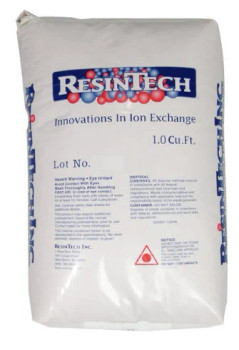
PFAS Removal Resin Certified for home use to filter out PFAS and Nitrates
$790.00ResinTech SIR-110-HP: PFAS-Selective and Nitrate Removal Resin – 1 Cubic Foot Premium Anion Exchange Resin for Targeted Removal of PFAS and Nitrates from Water ResinTech SIR-110-HP is a...RTPFAS-10$790.00