
Air Injection Iron Filter: The Chemical-Free Fix for Iron, Sulfur, and Manganese in Well Water
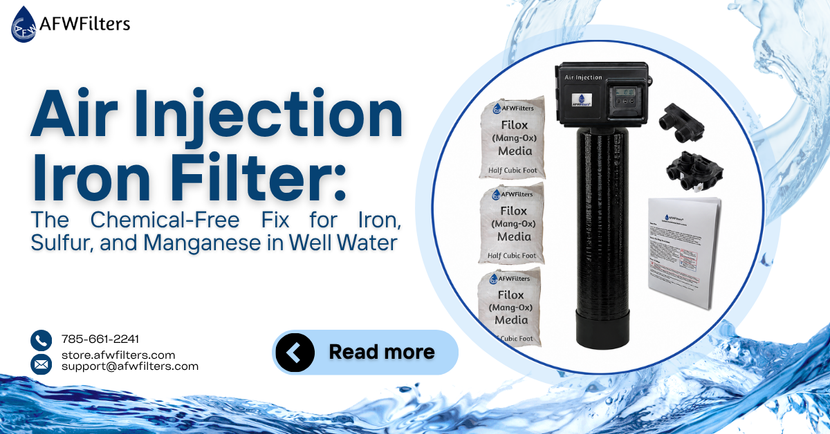
Discover how air injection filters remove iron, sulfur, and manganese from well water without using chemicals.
You fill a glass of water from your kitchen tap and hold it up to the light. It looks fine, maybe slightly off-color. Then comes the smell. That unmistakable rotten egg odor.
If you're on a private well, you're not imagining things. Iron, hydrogen sulfide (sulfur), and manganese are among the most common well water problems across the United States, and they're notoriously stubborn to deal with. Chemical injection systems are messy and require constant upkeep. Water softeners can handle low iron levels, but aren't designed for heavy contamination. And simply ignoring the problem means permanently stained laundry, corroded pipes, and water that nobody in your household actually wants to drink.
That's exactly why the air injection iron filter has become one of the most trusted solutions for well water homeowners. It's highly effective, completely chemical-free, and once it's running, it largely takes care of itself. Here's everything you need to know about how it works, whether it's right for your situation, and how to choose the correct system.
Table of Contents
What Does Iron Actually Do to Your Water and Your Home?
Before exploring the solution, it helps to understand the scale of the problem. The EPA sets the secondary maximum contaminant level for iron in drinking water at just 0.3 milligrams per liter (mg/L), a tiny threshold. Well water across the US regularly tests anywhere from 1 ppm to well above 10 ppm, meaning some homes are dealing with iron levels that are 30 to 50 times what's considered acceptable.
Iron in well water shows up in three forms:
- Ferrous iron (dissolved): Water runs clear from the tap but turns reddish-brown after sitting in air. This is the most common type in private wells.
- Ferric iron (particulate): Water comes out visibly red or cloudy because the iron is already oxidized into rust particles.
- Bacterial iron: A slimy, reddish-brown biofilm that coats pipes, tanks, and fixtures, often accompanied by a foul odor.
Manganese follows a similar pattern, leaving black or dark purple stains rather than orange-red ones. And hydrogen sulfide, the source of that rotten egg smell, is produced naturally in groundwater through bacterial activity and chemical reactions with sulfur-containing minerals. Left untreated, these contaminants will:
- Leave permanent stains on sinks, toilets, tubs, and laundry
- Shorten the lifespan of water heaters, dishwashers, and washing machines
- Clog pipes and pressure tanks over time
- Make your water taste metallic or smell offensive
- Reduce water pressure throughout your home
How an Air Injection Iron Filter Works
An air injection water filter system uses oxygen to transform dissolved iron and sulfur into solid particles that can then be physically filtered out of the water. Here's the process:
1. The Air Pocket
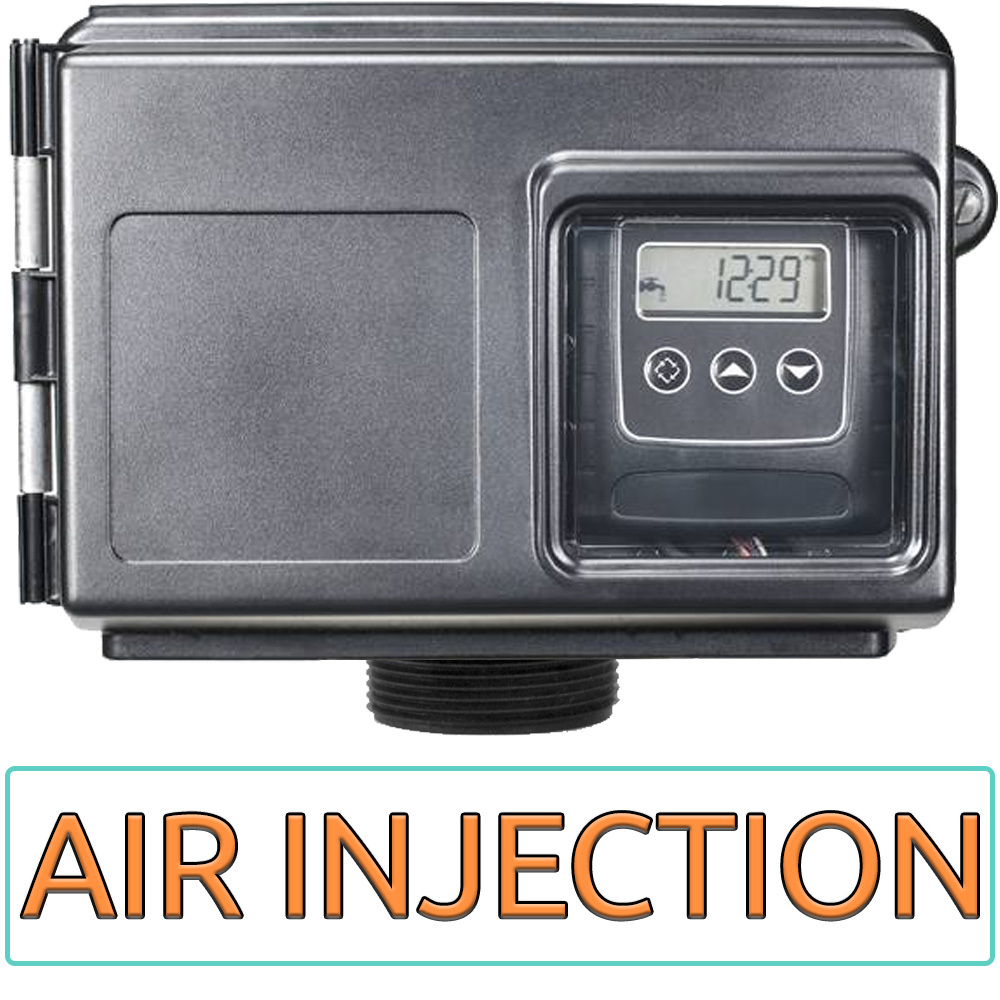
A specialized control valve maintains a pressurized pocket of air at the top of the filter tank. As well water enters the tank and passes through this air chamber, dissolved ferrous iron (Fe²⁺) is exposed to oxygen and oxidizes into ferric iron (Fe³⁺), converting from an invisible dissolved state into solid particles. At the same time, hydrogen sulfide gas is oxidized and neutralized, eliminating that sulfur odor at the source.
2. The Filter Bed
Freshly oxidized particles travel down through the filter media bed at the bottom of the tank. Different media types Filter Ag, Catalytic Carbon, Birm, Filox, or manganese dioxide-based media trap and hold these particles based on the contaminant levels and water chemistry of your specific well. The water that exits the system on the other side is clean, clear, and odor-free.
3. Automatic Backwash
Once a day (typically at midnight when water demand is low), the digital control head initiates an automatic backwash cycle. The system flushes the accumulated iron, manganese, and sulfur particles down the drain, replenishes the air pocket, and resets itself for another day of service. No chemicals. No salt. No manual intervention required.
Air Injection vs. Other Iron Removal Methods
It's worth briefly comparing air injection to the alternatives, because not every iron problem requires the same solution:
|
Method |
Best For |
Limitation |
|
Air Injection Filter |
Iron up to 20+ ppm, sulfur, manganese all in one tank |
Sizing must match flow rate and contamination level |
|
Water Softener |
Low iron levels (<3 ppm), hard water minerals |
Not designed for high iron or sulfur; clogs resin |
|
Chlorine Injection |
Very high iron and bacterial iron |
Requires chemical supply, ongoing cost, more maintenance |
|
Sediment Filter Only |
Ferric (particulate) iron only |
Does nothing for dissolved ferrous iron or sulfur odor |
For most well water homeowners dealing with moderate to high iron levels, especially when sulfur smell or manganese staining is also present, the iron and manganese water filter using air injection is the most practical, cost-effective, and low-maintenance path forward.
Choosing the Right System: What to Know Before You Buy
Air injection systems come in different sizes and media configurations. Matching the right one to your water is critical; an undersized system won't solve your problem, and the wrong media won't address your specific contaminants. There are three key variables:
Iron and Sulfur Levels
Get a water test before purchasing anything. Your iron concentration (in ppm) and sulfur levels determine both the system capacity and the media type needed. Entry-level systems like the Air Injection Silver series handle iron up to 8–10 ppm, appropriate for average well water contamination.
Peak Flow Rate
The system must handle your home's peak water demand without pressure loss. A family of four in a typical home generally needs a minimum of 5-10 GPM (gallons per minute). Larger homes or higher-demand households require systems rated for 15–20 GPM.
Water pH
Air injection works most efficiently at a neutral to slightly alkaline pH (above 6.8). If your well water is acidic, the oxidation process slows significantly, and you may need pre-treatment or a different filter media. Again, a comprehensive water test will reveal this.
Why AFWFilters for Your Air Injection System?
AFW Filters, operating as Abundant Flow Water Systems Inc. out of Kansas, has been solving exactly these kinds of water problems since 1998. That's over 25 years of helping US homeowners, farms, and commercial properties get the clean water they deserve at pricing that makes sense.
What separates AFW from a generic online retailer is the depth of knowledge behind every sale. Their team doesn't just ship boxes; they help you select the right system for your specific water test results, your home's flow rate, and your budget. Have a question during installation? Their support staff is available and genuinely helpful, as thousands of verified customers across the country have noted.
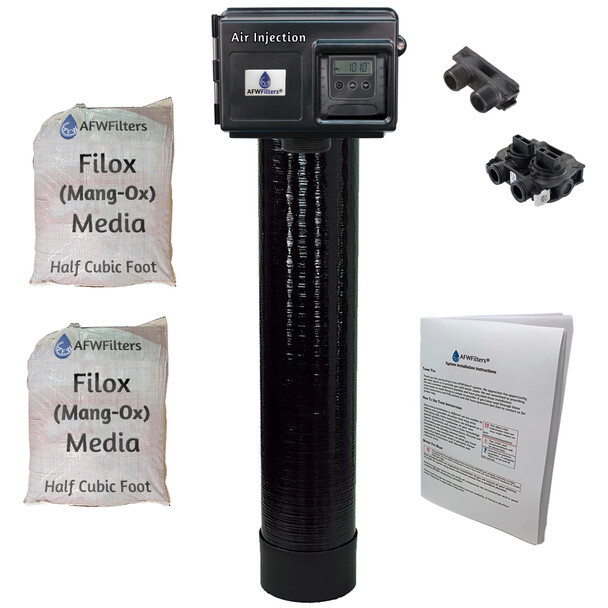
AFW carries its own branded AIS (Air Injection Silver, Gold, Platinum, and Titanium) series alongside trusted third-party systems with Fleck control valves, one of the most reliable and widely serviced digital control heads in the industry. Systems ship loaded and ready to install; stainless steel bypass valves are standard, and pricing is consistently competitive.
AFW is a proud member of the Water Quality Association and the Better Business Bureau, credentials that reflect a company that takes both the science of water treatment and the experience of its customers seriously.
Whether you're dealing with 3 ppm iron or 20+ ppm, a faint sulfur odor or water that smells like a match factory, AFW's team can point you to the exact system that will fix it.
Frequently Asked Questions
How long does an air injection iron filter last?
The filter tank and control valve are built to last well over a decade with proper care. The media inside the tank typically remains effective for 5–10 years.
Do air injection filters remove sulfur smell completely?
Yes, in most cases, completely. Hydrogen sulfide (the source of the rotten egg odor) is highly reactive to oxygen. As water passes through the air pocket in the tank, the sulfur gas is oxidized and neutralized.
Will an air injection filter also soften my water?
No. An air injection iron filter targets iron, manganese, and hydrogen sulfide; it does not remove hardness minerals like calcium and magnesium.
How much water does the backwash cycle use?
A typical backwash cycle on a residential air injection system uses between 50–100 gallons of water, running once every 2-3 days (usually at night).
Can I install an air injection system myself?
Most homeowners with basic plumbing experience can handle the installation. AFW Filters ships systems pre-loaded with media and includes step-by-step installation instructions along with video guidance.
Recent Posts
-

Residential Water Softener Systems: How to Choose the Right Size & Type
KEY TAKEAWAYS Most professionals recommend softening above 7 grains per gallon (GPG). Size on …Published Date: Sep 17 2026 -
Water Filter Replacement Schedule: How Often to Change (2026 Guide)
A well-maintained filtration system means better-tasting water, spot-free dishes, and one less thing …Published Date: Aug 30 2026 -
Fleck 5600 vs 5600SXT vs 2510: Which Valve Is Right?
If you have been comparing water softeners, the same three valve names keep appearing: Fleck 5600, F …Published Date: Aug 28 2026