
Water Softener for Iron and Sulfur: Do You Need Both?
Learn when a water softener, iron filter, or combination system is needed to treat hardness, iron, and sulfur odors.
KEY TAKEAWAYS
- Softeners target hardness; they rarely fix both iron and sulfur alone.
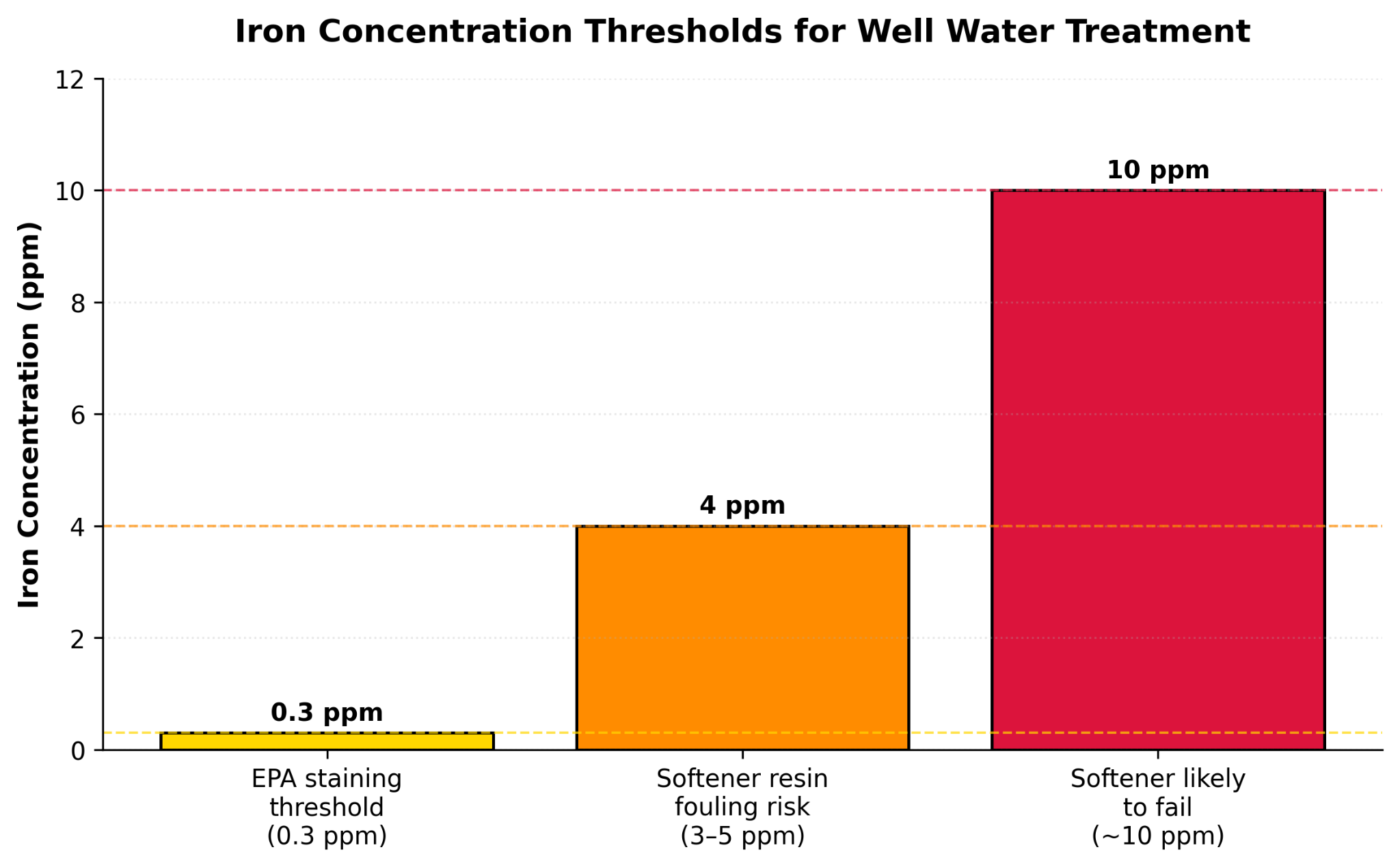
- Resin handles ~3–5 ppm clear (ferrous) iron; higher levels foul it.
- Rotten-egg smell = hydrogen sulfide gas; needs oxidation/aeration, not softening.
- Most wells with hardness + iron/sulfur need: iron/sulfur filter first, then softener.
- Test first: treatment depends on exact iron, hardness, and H₂S levels.
If your well water leaves rust-colored stains in the sink or smells like rotten eggs when you run the tap, you're likely dealing with two separate problems at once: hardness and either iron, hydrogen sulfide, or both. A water softener for iron and sulfur sounds like a one-box solution, but softeners and iron filters are built to remove different things. Understanding which system handles which problem and when you need both saves you from buying equipment that won't fix your water.
This guide breaks down what a standard hard water softener system can and can't do about iron and sulfur, what causes each problem, and how to decide between a softener, an iron and sulfur filter system, or a combination unit.
3-Question Self-Check: Softener, Filter, or Both?
Not sure where to start? Answer these three quick questions to narrow down your treatment needs.
- Do you have hard water? White scale on faucets, spotted dishes, and soap that won't lather point to hardness above ~7 grains per gallon.
- Do you see iron staining? Rust-colored stains in sinks, toilets, or laundry mean iron is present, even if the water looks clear at the tap.
- Do you smell rotten eggs? A sulfur or "rotten egg" odor from cold water (especially at multiple taps) signals hydrogen sulfide gas.
What your answers mean:
- Hardness only: a softener is usually enough.
- Iron or sulfur odor: you'll need an iron/sulfur filter, possibly with a softener.
- All three: use a combination system — iron/sulfur filter first, then softener.
Can a Water Softener Remove Iron and Sulfur Smell?
A standard water softener can remove small amounts of clear-water (ferrous) iron through the same ion-exchange process it uses for calcium and magnesium, but it cannot remove hydrogen sulfide gas, sulfur bacteria, or red/rust-colored (ferric) iron. Softeners are hardness appliances first; iron and sulfur removal are secondary, limited capabilities.
How Much Iron Can a Softener Actually Handle?
Softener resin beads exchange sodium for hardness minerals, and dissolved ferrous iron can ride along in that same exchange up to a point. Most water treatment professionals cap that point at roughly 3–5 ppm of clear ferrous iron before the resin starts fouling: iron oxidizes inside the tank, coats the resin beads, and blocks the exchange process entirely. Once fouling sets in, the softener stops removing hardness and iron, and regeneration cycles stop working as designed.
Ferric (rust-colored, already-oxidized) iron and iron bacteria are a different story; a softener will not remove either one, regardless of concentration.
Why Sulfur Smell Needs a Different Kind of Treatment
Hydrogen sulfide is a gas, not a mineral, so ion exchange doesn't touch it. Sulfur removal requires oxidation, converting dissolved H₂S into solid sulfur particles that can be filtered out through methods like air injection, ozone, chlorination, or an oxidizing filter media such as manganese dioxide. This is also why sulfur bacteria problems sometimes need shock chlorination of the well itself, not just a point-of-entry filter.
"Softener resin can handle a modest amount of dissolved iron, but it was never designed to strip hydrogen sulfide gas out of water; that's an oxidation problem, not an exchange problem."
Air Injection Oxidation (AIO) Filters
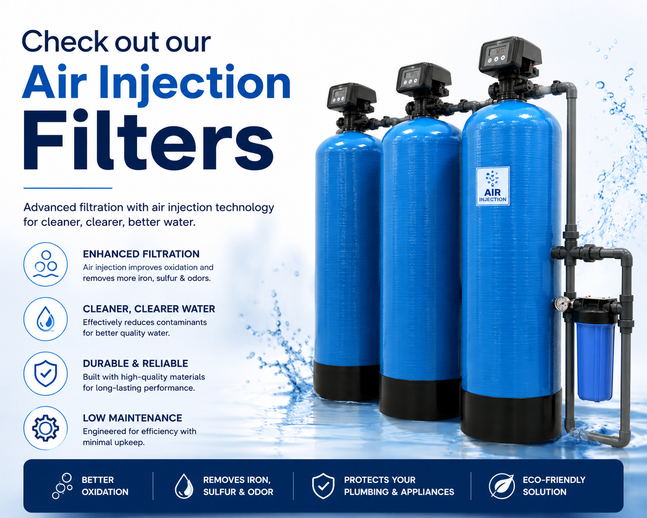
Air injection oxidation (AIO) is a popular chemical-free way to treat well water with iron and hydrogen sulfide. Instead of adding chlorine or other chemicals, an AIO system pulls air into the water as it enters the filter tank.
- Air is injected into the incoming water, creating an air pocket at the top of the tank.
- Oxygen oxidizes dissolved iron and hydrogen sulfide into solid particles.
- Filter media traps these particles, and a backwash cycle flushes them to drain.
AIO works well for moderate iron (often up to ~10–15 ppm, depending on the unit) and low to moderate sulfur odor, with lower ongoing maintenance than chemical-fed systems.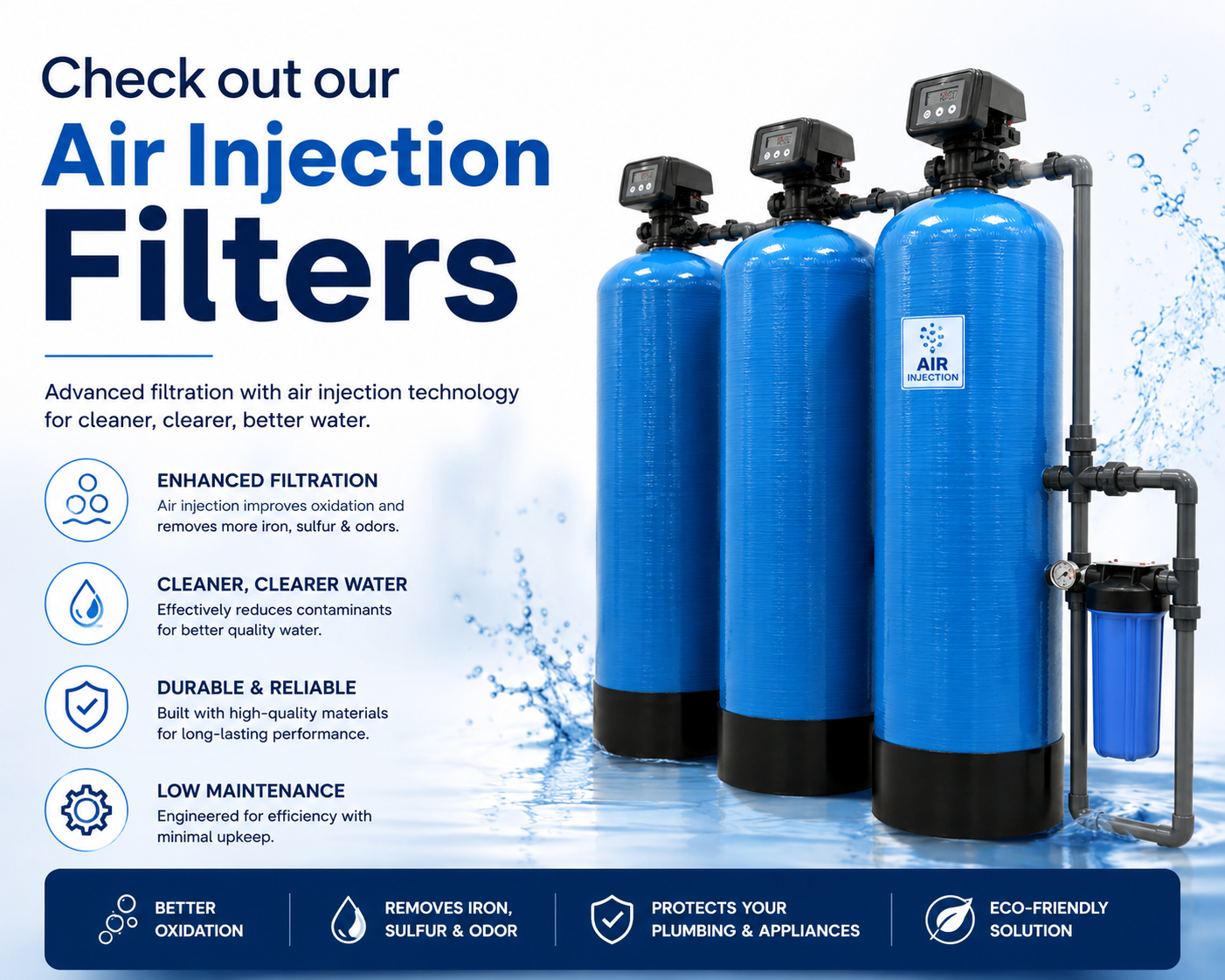
Check Out Our Air Injection Filters →
Water Softener vs. Whole House Iron Filter vs. Combination System
|
Feature |
Water Softener |
Whole House Iron Filter |
Combination System |
|
Removes hardness (calcium/magnesium) |
Yes |
No |
Yes |
|
Removes clear (ferrous) iron |
Limited, up to ~3–5 ppm |
Yes, higher capacity |
Yes |
|
Removes rust-colored (ferric) iron |
No |
Yes |
Yes |
|
Removes hydrogen sulfide odor |
No |
Depends on media (some oxidizing filters do) |
Yes, with correct media |
|
Protects softener resin from fouling |
N/A |
Yes, when installed upstream |
Yes |
|
Best for |
Hardness-only water |
Iron- or sulfur-heavy water with low hardness |
Wells with hardness plus iron and/or sulfur |
"Treating hardness and iron as the same problem is the most common and most expensive mistake well owners make."
Do You Need Both a Softener and an Iron Filter?
If a water test shows hardness above roughly 7 grains per gallon and iron or hydrogen sulfide above the levels noted earlier, sequencing two systems is typically the most reliable fix: an iron or sulfur filter installed first, followed by the softener downstream. This order protects the softener resin from fouling while still delivering fully softened, odor-free water at every tap. Combination softener and iron filter systems package both stages into a single footprint, which is often more practical for a mechanical room or crawlspace than two separate tanks.
"The right order — iron and sulfur treatment first, softener second — is what determines whether your equipment lasts five years or fifteen."
How Do You Know Which System You Need?
A certified water test is the only reliable way to confirm iron type (ferrous vs. ferric), hydrogen sulfide concentration, hardness, and pH before choosing equipment. Guessing based on smell or stain color alone often leads to undersized or mismatched systems that fail within a year or two.
|
Test for |
Why it matters |
What it changes |
|
Total and dissolved iron |
Separates ferrous from ferric |
Whether a softener can handle it at all |
|
Hardness (gpg) |
Sizes the softener |
Grain capacity and salt use |
|
Hydrogen sulfide |
Rules out ion exchange |
Requires an oxidizing stage |
|
Manganese |
Needs higher oxidation potential |
Media selection |
|
pH |
Most iron media need above ~6.5 |
May need pH correction first |
|
Iron bacteria |
Separate bacteriological test |
Requires shock chlorination, not just filtration |
AFW Filters' iron and sulfur filter systems are sized around actual test results, and pair with AFW's residential water softeners when hardness is also present. Call 785-661-2241 to read your results to the team.
Frequently Asked Questions
Can a water softener remove iron and sulfur smell?
A standard softener can remove a limited amount of clear (ferrous) iron, but it cannot remove hydrogen sulfide gas, the source of rotten egg smell, or rust-colored ferric iron. Sulfur odor needs an oxidizing filter or aeration system, not a softener alone.
What is the best water treatment system for iron and sulfur in well water?
For wells with both hardness and iron/sulfur, a combination system with an iron/sulfur filter installed ahead of a water softener is generally the most reliable setup. It protects the softener resin from iron fouling while removing odor and staining at the source.
How much iron will foul a water softener?
Most softener resin starts fouling once clear ferrous iron exceeds roughly 3–5 ppm, though pH, iron form, and water flow all affect the exact threshold. Wells above that level typically need iron pre-treatment.
Does a water softener remove the rotten egg smell from well water?
No. Rotten egg smell comes from hydrogen sulfide gas, which passes through softener resin untouched. It requires oxidation-based treatment such as air injection or an oxidizing filter media.
Is the sulfur smell from well water dangerous?
Hydrogen sulfide at typical household concentrations is generally not a health hazard, though it can indicate sulfur bacteria activity and is corrosive to plumbing over time. Persistent or strong odor should still be tested and addressed.
Can I install an iron filter myself, or do I need a plumber?
Many whole house iron filters are designed for DIY installation with standard plumbing tools, though local code and well configuration can affect this. If you're not confident with sweat-soldering or PEX connections, a licensed plumber is worth the cost.
How often does an iron or sulfur filter need maintenance?
Most oxidizing iron/sulfur filters backwash automatically on a set schedule, similar to a softener, and need periodic media top-off (often annually) depending on water chemistry and usage.
Recent Posts
-

Residential Water Softener Systems: How to Choose the Right Size & Type
KEY TAKEAWAYS Most professionals recommend softening above 7 grains per gallon (GPG). Size on …Published Date: Sep 17 2026 -

Water Filter Replacement Schedule: How Often to Change (2026 Guide)
A well-maintained filtration system means better-tasting water, spot-free dishes, and one less thing …Published Date: Aug 30 2026 -
Fleck 5600 vs 5600SXT vs 2510: Which Valve Is Right?
If you have been comparing water softeners, the same three valve names keep appearing: Fleck 5600, F …Published Date: Aug 28 2026