
Water Filter Replacement Schedule: How Often to Change (2026 Guide)
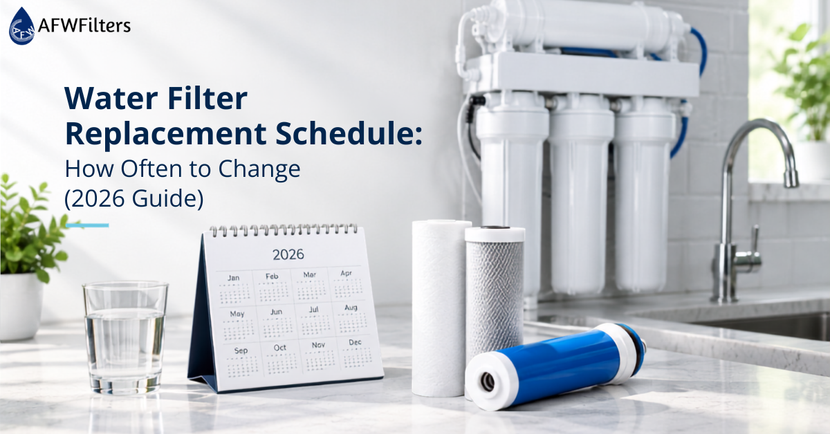
A well-maintained filtration system means better-tasting water, spot-free dishes, and one less thing to think about every time you turn on the tap.
KEY TAKEAWAYS
- Filters are rated in gallons; households think in months. The interval on the box assumes average water — yours may not be.
- Well water and heavy household use push every interval toward the short end of its range.
- The most reliable indicator is a pressure drop across the filter, not the calendar.
- A spent carbon filter can make water worse than no filter at all; this is the one interval not worth stretching.
- Label every filter with the date you installed it. It takes five seconds and removes all guesswork.
A well-maintained filtration system means better-tasting water, spot-free dishes, and one less thing to think about every time you turn on the tap. The only thing standing between you and that is a simple water filter replacement schedule.
Every filter type wears out at its own pace: sediment, carbon, RO, UV, softener resin, and the fridge filter most people forget they have. This guide covers how often to change each one, how to tell when a filter is spent rather than guessing, and what the whole thing costs per year.
Water Filter Replacement Schedule by Type
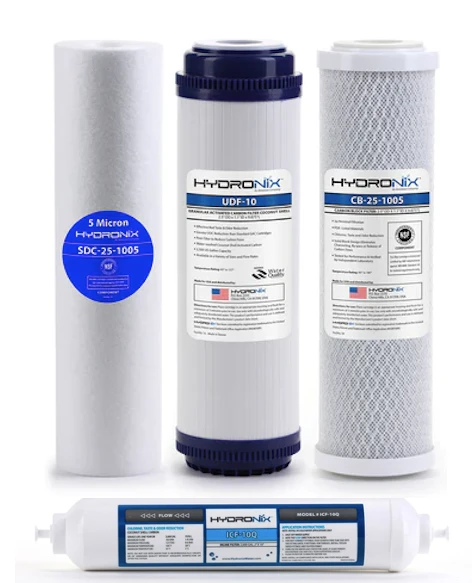
Start with the cartridge filters — the ones you physically swap out.
|
Filter Type |
Typical Interval |
What Shortens It |
|
Sediment filter |
3–6 months |
High sediment load, well water, heavy household use |
|
Carbon block cartridge |
6–12 months |
Heavily chlorinated or chloraminated water, high flow volume |
|
Refrigerator filter |
About 6 months |
Heavy ice and dispenser use; most fridges also track this internally |
|
Under-sink carbon (POU) |
6–12 months |
Same as whole-house carbon, but lower total volume |
|
Pitcher / faucet-mount filter |
2–4 months |
Small media volume; these are the shortest-lived filters in the home |
|
Shower filter |
6–12 months |
Chlorine level and shower frequency |
|
RO membrane |
2–5 years |
High source-water TDS, hard water, neglected pre-filters |
Then the equipment items, media, and components that are serviced rather than swapped: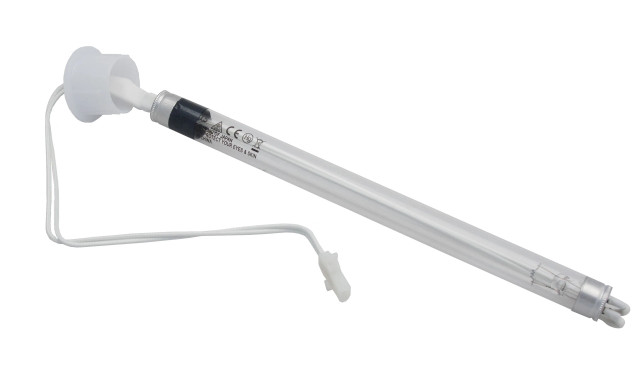
|
Equipment Item |
Typical Interval |
What Shortens It |
|
UV lamp |
About 12 months (~9,000 hours) |
Continuous use — output fades well before the lamp visibly dims |
|
UV quartz sleeve |
Clean every 6–12 months, replace as needed |
Hardness and iron scaling on the sleeve blocks UV output |
|
Water softener resin |
10–15 years |
Chlorinated water, standard 8% crosslink resin, iron fouling |
|
Iron / sulfur filter media |
5–10 years |
Heavy iron or sulfur load |
|
Control valve seals and piston |
As needed — years |
Chlorine, iron, sediment, pressure spikes |
How Often Should You Replace a Whole House Water Filter?
For most homes, whole-house sediment and carbon cartridges need attention on a predictable rhythm, but "typical" is not universal, and your actual water quality moves the number.
- City water, moderate use: closer to the 12-month end of the range.
- Well water, or heavy household use: closer to the 3–6 month end.
- Visibly cloudy or high-sediment source water: check monthly until you know your real-world rate.
This is the core of whole-house filter maintenance. The schedule on the box is a starting point, not a fixed rule for your specific water.
Signs Your Water Filter Needs Replacing
You do not have to wait for a calendar reminder. Your system usually tells you first.
- Pressure drop: noticeably weaker flow at the tap is the most common sign of a clogged filter restricting water movement.
- Taste or odour returning: chlorine taste or a musty or metallic smell coming back means the carbon media is saturated and no longer adsorbing.
- Visible cloudiness or sediment getting through means the filter's physical barrier has failed.
- Discoloration in water or on fixtures indicates iron, rust, or sediment is bypassing the filter entirely.
- Appliance issues: buildup in ice makers, coffee makers or water heaters fed by an overdue filter.
Any one of these filter change indicators on its own is worth acting on. Do not wait for two or three to show up together.
Stop Guessing: Measure the Pressure Drop
There is a better method than waiting for symptoms. Fit an inexpensive pressure gauge before and after the filter housing and note the difference when the system is new and flowing.
That figure is your baseline. As the filter loads with sediment, the gap between the two gauges widens. Once the drop reaches roughly double the baseline, the filter is restricting flow enough to warrant changing regardless of what the calendar says. It is the same method used on commercial systems, and it takes the guesswork out entirely.
"The calendar tells you when a filter is probably due. A pressure gauge tells you when it actually is."
Sediment Filter Lifespan: What Actually Determines It
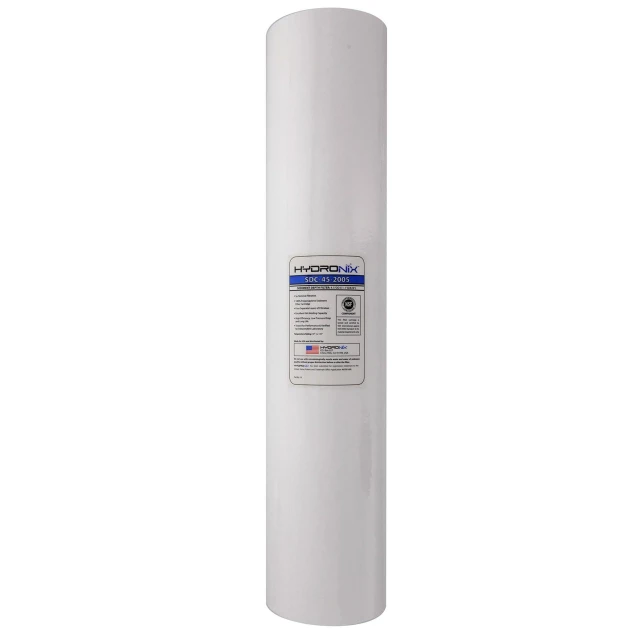
Sediment filters are rated by micron size, and that rating directly affects both filtration quality and how fast the filter clogs.
|
Micron Rating |
What It Catches |
Lifespan Impact |
|
20 micron |
Sand, rust, larger grit |
Lasts longest; coarser filtration |
|
5 micron |
Fine silt, suspended particles |
Moderate lifespan; clogs faster than 20 micron |
|
1 micron or below |
Very fine particles, cysts |
Shortest lifespan if used as a first stage without a coarser pre-filter |
A lower micron rating gives you finer filtration but a shorter working life. Staging a coarser filter ahead of a fine one is the standard way to protect the fine filter and extend its lifespan, and it usually costs less over a year than running a single fine filter you replace constantly.
What Happens If You Don't Change Your Water Filter?
This is where skipping the schedule stops being an inconvenience.
- Contaminant breakthrough. Once a filter's capacity is used up, it stops trapping what it is rated for, and chlorine, sediment, or other contaminants pass straight through into your water.
- Bacterial growth inside the filter. A saturated carbon filter is dark, damp, and full of trapped organic material — exactly the conditions bacteria need to multiply. Water leaving the filter can end up worse than water going into it.
- Reduced water pressure. A clogged filter restricts flow, and the drop worsens the longer replacement is delayed.
- Strain on the rest of your system. An overloaded sediment filter lets debris reach carbon media or an RO membrane downstream, shortening their life and raising long-term costs.
- Appliance damage. Sediment and mineral buildup affects ice makers, coffee machines, and water heaters fed by an overdue filter.
Well Water vs. City Water: Adjusting Your Schedule
|
Factor |
Well Water |
City Water |
|
Sediment load |
Typically higher |
Typically lower, but can spike after main repairs |
|
Iron/mineral content |
Often present; shortens filter life |
Usually minimal |
|
Chlorine level |
None unless treated |
Present; shortens carbon filter life specifically |
|
Recommended check frequency |
Every 3–6 months |
Every 6–12 months |
How to Change a Cartridge Filter
- Shut off the water supply to the filter housing and open a downstream faucet to relieve pressure.
- Place a bucket and towel under the housing; there is always more water in there than expected.
- Unscrew the housing using the filter wrench supplied with the system.
- Remove and discard the old cartridge, then rinse the housing and wipe out any sediment sitting in the bottom.
- Sanitise the housing if it has been in service a long time or you have had any taste or odour issues.
- Check the housing O-ring. Clean it, apply a thin film of food-grade silicone lubricant, and replace it if it is cracked, flattened, or hardened. A dry or damaged O-ring is the most common cause of a leaking housing after a filter change.
- Fit the new cartridge the correct way up and reseat the housing hand-tight, then a nudge with the wrench.
- Turn the water back on slowly, check for leaks, and flush the new cartridge for several minutes to clear carbon fines before drinking.
- Write the date on the new filter with a marker, or on a label on the housing. Five seconds now saves the guesswork in six months.
After a vacation or a seasonal shutdown
Water sitting still in a filter housing for weeks is a bacterial growth risk. Flush the system thoroughly on your return, and if the property has been closed for a season, change the cartridges rather than trying to reuse them.
Replace, Don't Guess: Shop the Right Part
Guessing at a replacement schedule is far less reliable than matching your filter to your actual water conditions and watching for the warning signs above. Browse our full range of replacement water filters by size, brand or part number.
If iron or sulfur is what keeps shortening your filter life, our iron removal water filters treat the problem at the source instead of overloading your sediment and carbon stages every few months. And if hardness is scaling your UV sleeve or your appliances, a water softener upstream extends the life of everything after it.
Not sure which cartridge fits your housing? Call 785-661-2241 with the model number or the dimensions if the label has worn off, and we will match it.
Frequently Asked Questions
How often should you replace a whole-house water filter?
Sediment and carbon cartridges typically last 6–12 months on city water, but well water or heavy household use can shorten that to 3–6 months. Watch for pressure drop or returning taste and odour as your real-world signal rather than relying on the calendar alone.
What are the signs your water filter needs replacing?
The most common signs are a noticeable drop in water pressure, chlorine taste or odour coming back, visible cloudiness or sediment in your water, and staining on fixtures. Any one of these means it is time to check the filter, even before your scheduled interval.
What happens if you don't change your water filter?
Contaminants the filter is supposed to trap start passing through untreated, and a saturated carbon filter can become a breeding ground for bacteria, potentially making water quality worse than before filtration. It also strains downstream components like RO membranes, shortening their life and raising long-term costs.
How often should I change my refrigerator water filter?
About every six months for most models, or sooner with heavy ice and dispenser use. Many refrigerators track usage and display an indicator, but that indicator is usually time- or volume-based rather than a measure of the filter's actual condition. If the water tastes different, change it regardless of what the light says.
Does a sediment filter's micron rating affect how often I need to replace it?
Yes. A finer rating such as 1 micron filters out smaller particles but clogs faster than a coarser 20-micron filter. Staging a coarser sediment filter ahead of a finer one is the standard way to extend the finer filter's working life.
Can I clean and reuse a water filter?
Some pleated and spun sediment filters can be rinsed once or twice to buy a little time, but it is a stopgap rather than a fix; rinsing removes surface debris while the depth of the media stays loaded. Carbon and RO membranes cannot be cleaned at all: carbon works by adsorption and its capacity is chemically spent, not just physically blocked, so rinsing achieves nothing.
How do I know when to replace an RO membrane rather than just the pre-filters?
A rising TDS reading in the product water is the clearest indicator. Slow production and a tank that no longer fills properly are secondary signs. If your pre-filters have been changed on schedule, expect the membrane to run several years; if they have not, it will fail much sooner.
Do well water filters need replacing more often than city water filters?
Generally yes. Well water typically carries more sediment, iron, and mineral content than treated municipal water, which shortens sediment and carbon filter life. City water systems can usually stretch toward the longer end of the replacement range, though chlorine and chloramine shorten carbon life specifically.
How do I remember when to change each filter?
Write the installation date directly on the cartridge or on a label on the housing, and set a recurring calendar reminder at the short end of the interval. Checking early costs nothing; checking late costs pressure, taste, and sometimes a membrane.
Recent Posts
-

Residential Water Softener Systems: How to Choose the Right Size & Type
KEY TAKEAWAYS Most professionals recommend softening above 7 grains per gallon (GPG). Size on …Published Date: Sep 17 2026 -
Water Filter Replacement Schedule: How Often to Change (2026 Guide)
A well-maintained filtration system means better-tasting water, spot-free dishes, and one less thing …Published Date: Aug 30 2026 -
Fleck 5600 vs 5600SXT vs 2510: Which Valve Is Right?
If you have been comparing water softeners, the same three valve names keep appearing: Fleck 5600, F …Published Date: Aug 28 2026