
Whole House Water Softeners - Buying Guide for Every Home Size
KEY TAKEAWAYS
- Match grain capacity to household size × hardness (GPG), don't guess
- Metered valves outperform timer valves for salt/water savings
- Salt-based softeners remove hardness; salt-free only prevents scale
- Well water needs fine mesh resin + possible iron filter
- Fleck/Clack valve platforms with 10% crosslink resin last longest
- Budget $150–$500 for professional installation on top of unit cost
Shopping for a water softener usually starts with one frustrating discovery: every brand claims to sell the best whole house water softener, and none of them agree on how to size one. This guide skips the marketing and helps you through the actual numbers, grain capacity, hardness levels, and valve types so you can match a system to your home instead of guessing.
What Actually Makes a Water Softener "Best" in 2026
There's no single best system for every house. The right fit for quality water softener systems comes down to three things: your water hardness in grains per gallon (GPG), your household's daily water use, and whether you're on city or well water. Get those three numbers right, and almost any reputable whole house water softener system will perform well. Skip that step, and even an expensive system will regenerate too often or run out of capacity mid-week.
Beyond sizing, look for NSF/ANSI 44 certification, the industry standard test confirming a softener actually reduces hardness to its claimed capacity. It's one of the fastest ways to separate genuinely capable systems from inflated marketing claims.
What is a Water Softener?
A water softener is a whole-house filtration system that removes calcium and magnesium, the minerals that cause "hard water" through a process called ion exchange. As hard water passes through a tank of resin beads, those minerals are swapped for sodium (or potassium) ions, leaving your water soft: better lather, no scale buildup, and no mineral spots on dishes or fixtures.
Understanding Water Hardness (GPG) Before You Buy
Before comparing tanks or valves, you need to know your starting point. Water hardness is measured in grains per gallon (GPG) or parts per million (PPM), and the U.S. Geological Survey uses this standard scale:
|
Classification |
Grains Per Gallon (GPG) |
|
Soft |
Less than 1.0 |
|
Slightly Hard |
1.0 – 3.5 |
|
Moderately Hard |
3.5 – 7.0 |
|
Hard |
7.0 – 10.5 |
|
Very Hard |
10.5 and above |
Most U.S. tap water falls in the moderately hard to hard range, and once you're above 7 GPG, most water treatment professionals recommend softening. You can get an exact number from a home test strip, a lab test, or your city's annual water quality report.
Water Softener Sizing Chart by Household Size
Once you know your hardness, sizing comes down to a simple formula: people in the home × 75 gallons per day × hardness in GPG = your daily grain requirement. Multiply by 7 for a weekly target, then round up to the nearest standard grain capacity.
|
Household Size |
Moderately Hard (under 7 GPG) |
Hard/Very Hard (7+ GPG) |
|
1–2 people |
24,000 grain |
32,000 grain |
|
3–4 people (best water softener for a family of 4) |
32,000–40,000 grains |
48,000 grain |
|
5+ people |
48,000–64,000 grain |
64,000–96,000 grain |
Undersizing is the most common mistake homeowners make. A softener that's too small regenerates almost daily, which wastes salt and shortens resin life. Check out the water softener sizing guide at AFW Filters before making a purchase.
Metered vs Timer Regeneration: Which Should You Choose
This is where older and newer softeners really diverge. Timer-based valves regenerate on a fixed schedule regardless of how much water you actually used, which wastes salt and water on light-use days. Metered (demand-initiated) valves track your actual water consumption and only regenerate when the resin bed is close to exhausted, which is why nearly every quality water softener system sold today uses metered control, like the Fleck 5600SXT metered valve. If you're comparing options, prioritize a metered valve over a timer-based one; it's the single upgrade that saves the most salt and water over the system's lifetime.
A full regeneration cycle happens in four stages: backwash (loosens and flushes trapped sediment from the resin bed), brine draw (pulls the salt solution through the resin to strip out accumulated hardness minerals), rinse (flushes the resin clean of leftover brine), and refill (restores water to the brine tank for the next cycle). Metered valves trigger this sequence based on actual usage; timer valves trigger it on a fixed clock regardless of need.
Salt-Based vs Salt-Free: Which Actually Works
This is one of the most misunderstood decisions in the entire buying process. A salt-based softener uses ion exchange to physically remove calcium and magnesium from your water; your water tests soft afterward, soap lathers better, spot-free dishes, and less mineral buildup in water heaters and pipes over time. A salt-free "conditioner" doesn't remove anything; it uses Template-Assisted Crystallization (TAC) to change the mineral structure so it's less likely to stick to surfaces, but your water still tests hard on a hardness meter.
Salt-free systems work reasonably well for scale prevention up to about 10 GPG on clean city water, but they lose effectiveness at higher hardness and are notably unreliable on well water, since iron and manganese coat the TAC media and stop it from working. If you want genuinely soft water: the slippery feel, the better lather, the spot-free dishes, only a salt-based system delivers that.
Separate softeners from reverse osmosis (RO) systems entirely: a softener removes hardness minerals for scale prevention, while RO removes a much broader range of contaminants for drinking water quality. Many households run both, a whole-house softener plus an under-sink RO unit, since they solve different problems. A whole-house filter (sediment, chlorine, carbon) is different again, and isn't a substitute for either.
Note that some municipalities, particularly parts of California and Texas, restrict or ban salt-based softener discharge into wastewater systems; check local regulations before buying if you're in an area with known restrictions.
Best Water Softener for Well Water
Well water changes the calculus. Beyond hardness, wells often carry iron, manganese, or sediment that a standard softener resin isn't built to handle. For the best water softener for well water, look for a fine mesh resin option, which is denser than standard resin and handles low levels of dissolved iron (roughly 1–3 ppm) without fouling as quickly. If your well tests above that iron threshold, plan on pairing the softener with a dedicated iron filter using media like Birm or Katalox Light installed ahead of it; this protects the softener's resin tank from iron buildup.
Which Water Softener Brand Lasts the Longest?
There's no single brand that universally outlasts every other, but the industry pattern is consistent: systems built on proven control valve platforms, like Fleck or Clack, tend to have the longest service life because parts, rebuild kits, and documented service intervals are widely available years after purchase.
Mechanical valves are generally the most durable option since they have no circuit board to fail, while digital metered valves trade some of that ruggedness for more precise regeneration control. Resin quality matters just as much as the valve. 10% crosslink resin typically outlasts standard 8% resin on chlorinated city water, often by several years, because it resists chlorine oxidation better.
Look for products tested to WQA (Water Quality Association) standards, and prefer installers who carry WQA certification; they tend to size and set up systems more accurately, which matters as much for long-term reliability as the hardware itself.
Resin Tank & Brine Tank: What's Inside Your System
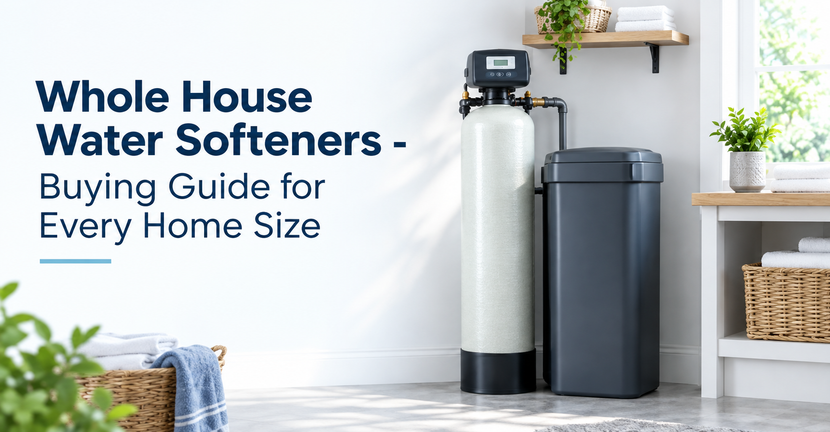
Every salt-based softener has two tanks working together. The resin tank holds the ion-exchange beads that actually remove hardness minerals as water passes through. The brine tank stores the salt and water solution used to flush (regenerate) that resin once its capacity is used up. A bypass valve lets you route water around the whole system, useful during maintenance, salt refills, or if the unit needs servicing without cutting off your home's water supply. Understanding this two-tank setup makes it much easier to troubleshoot issues later; for example, a "salt bridge" in the brine tank is a common reason a softener stops working even though the resin tank is fine.
Most systems use sodium chloride pellets in the brine tank, but potassium chloride is a common substitute for households managing sodium intake. It costs more but works through the same ion-exchange process.
How Often to Add Salt
Check your brine tank monthly and refill when salt levels drop below about one-third full. Running low is one of the most common reasons a softener silently stops producing soft water. Also periodically check for a "salt bridge," a hardened crust that can form above the water line and block the salt from dissolving properly; breaking it up with a broom handle or pole usually resolves it.
Frequently Asked Questions
How do I know what size water softener I need?
Multiply the people in your home by 75 gallons per day, then by your water hardness in GPG, then by 7 for a weekly total. Round up to the nearest standard grain size; most families of 3–4 on moderately hard water land in the 32,000–48,000 grain range.
What's the difference between metered and timer regeneration?
A metered valve regenerates based on actual water use, saving salt and water. A timer-based valve regenerates on a fixed schedule whether it's needed or not. Metered valves are the standard for quality systems today.
Do salt-free water softeners actually work?
They prevent scale buildup but don't remove hardness minerals, so your water still tests hard. They work reasonably well on city water under 10 GPG but are generally unreliable on well water due to iron and manganese fouling the media.
Which water softener brand lasts the longest?
No single brand universally wins, but systems built on established valve platforms like Fleck, with 10% crosslink resin, consistently show the longest service life due to parts availability and chlorine resistance.
Can I install a water softener myself?
Yes, most systems include a bypass valve and instructions, and take 2–4 hours for someone comfortable with basic plumbing. Professional installation typically adds $150–$500 on top of the unit cost, depending on plumbing complexity.
Recent Posts
-
Understanding Water Filter Replacement Parts: Cartridges, O-Rings & Housings
Replacing a water filter cartridge sounds simple until you're standing in front of your housing with …Published Date: Oct 14 2026 -

Water Softener Installation: Cost, Steps and DIY Guide
Your softener has arrived and it is sitting in a box in the garage. Now what? Installation is where …Published Date: Oct 5 2026 -
Residential Water Softener Systems: How to Choose the Right Size & Type
There is a real difference between water that simply comes out of the tap and water that actually fe …Published Date: Sep 17 2026